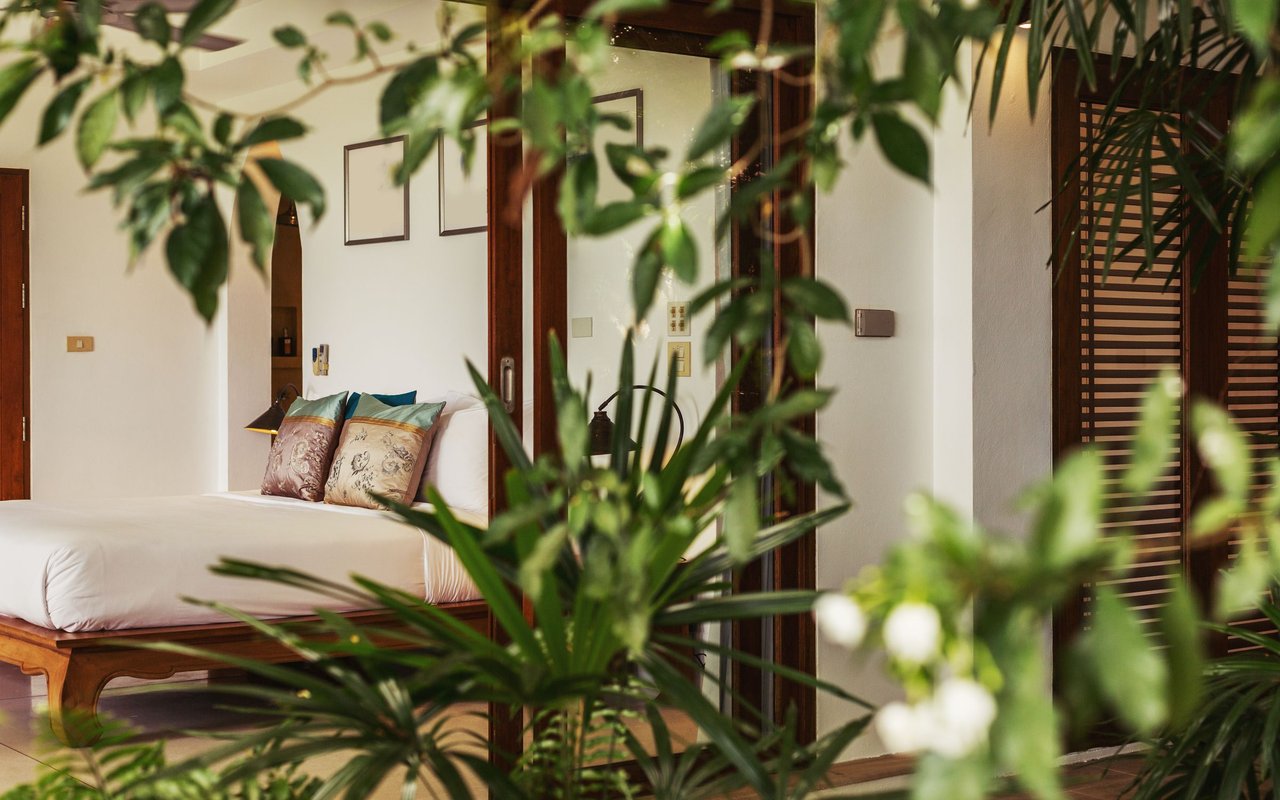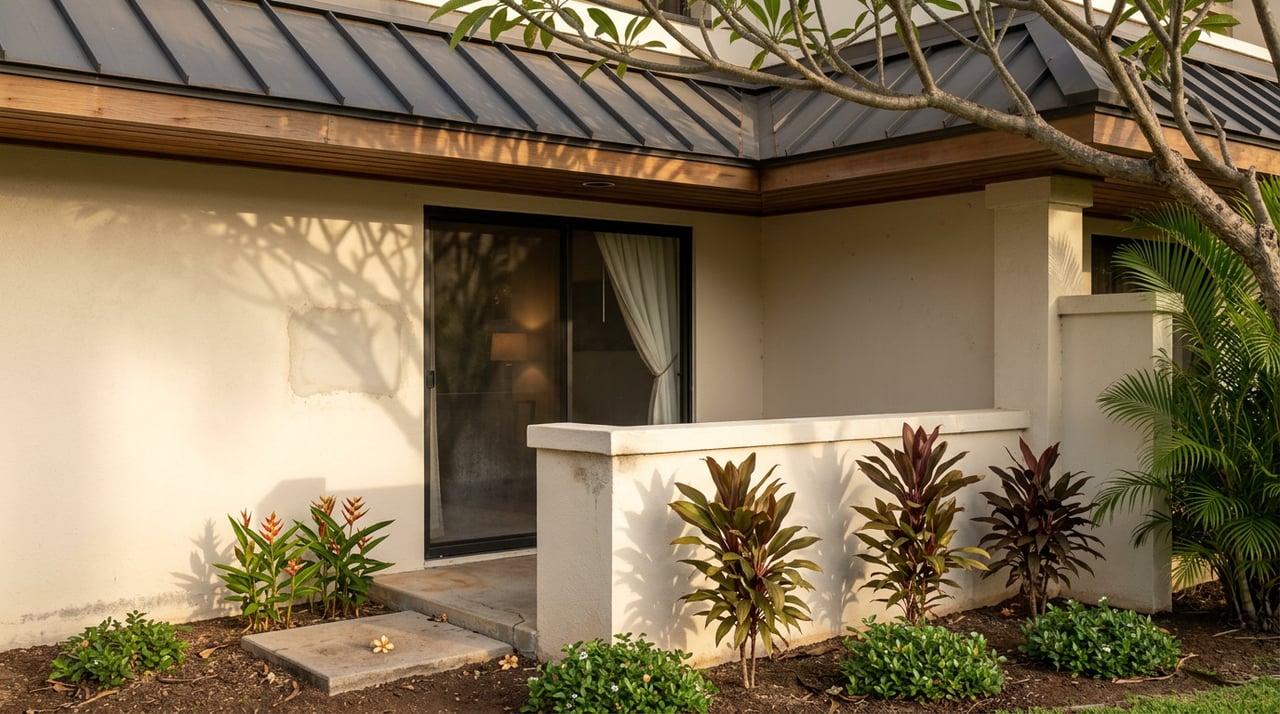
Pull up two condo listings in what the MLS calls the Napili-Honokowai neighborhood and you'll likely see two very different numbers attached to two very similar-looking lanais. The difference may come down to zoning: buildings in the same neighborhood can face different rules and timelines for vacation-rental use.
That's the part the median price doesn't tell you. Across the West Maui condo corridor that includes Napili, Kahana, and Honokowai, sales rose 18 percent between the first half of 2025 and the first half of 2026, while the median sale price fell from $630,000 to $550,000 and average days on market stretched from 141 to 185, according to a mid-year 2026 market report. Read on its own, that looks like a straightforward story: more inventory, softer prices, a buyer's market. It isn't one story. It's two, and the difference between them comes down to a zoning line that runs directly through this neighborhood and doesn't show up on a listing sheet.
The Line a Zip Code Doesn't Draw
In December 2025, Maui County signed one of the most consequential real estate laws in its history. Bill 9 phases out short-term vacation rentals in condos that sit on apartment-zoned land, the so-called Minatoya List properties that have operated as nightly rentals for decades under a legal workaround, even though the underlying zoning was always meant for long-term residential use. Mayor Richard Bissen framed the law as a correction, not an expansion of rules. As the county's own announcement put it, transient vacation rentals had grown to make up 21 percent of Maui County's overall housing stock, more than any other county in the state, according to Maui County's official statement on the bill's signing.
What Bill 9 does not do is treat every apartment-zoned condo the same way, and it does not touch hotel-zoned buildings or true resort inventory at all. That distinction matters enormously inside this specific corridor, because Napili, Kahana, and Honokowai each landed in a different bucket.
Maui County Council meeting minutes describe the Napili Bay Civic Improvement District as outside Bill 9's phase-out and as allowing short-term rentals there. Buildings within the district are largely untouched by the phase-out regardless of what the broader West Maui headlines say.
Honokowai and Kahana require building-level checks: a specific condo's zoning determines whether its vacation-rental use falls within Bill 9's phase-out.
For West Maui, StaySTRA puts the deadline at January 1, 2029. After that date, nonconforming apartment-zoned vacation rental use expires, a point owners at the Kāʻanapali Royal condominiums are currently contesting in court.
How Zoning Differences Affect the Median
Here is where the composition problem shows up. The corridor-wide numbers, that $630,000-to-$550,000 median drop, that 18 percent jump in closed sales, are an average of two markets that are pricing two different assets. One group of units still has an unrestricted rental future. The other has a firm expiration date that starts affecting underwriting and resale value well before 2029 actually arrives, because buyers and lenders discount future income today rather than waiting for the deadline to hit.
Some of the softening is happening in buildings that were never exposed at all. Prices have dropped even in hotel and resort-zoned condos that Bill 9 doesn't touch, a spillover effect driven less by regulation and more by uncertainty rattling the whole segment. That's a genuine opportunity for a buyer who wants a Kahana lanai and has no interest in nightly rental income. It is a very different opportunity than a Minatoya-listed unit in Honokowai discounting for a rental clock that's actually running.
An economic impact analysis presented to the county council during Bill 9's hearings estimated that condo prices in the phased-out zones could ultimately fall 20 to 40 percent, according to reporting from Courthouse News Service on the council vote. If that range holds, the roughly 13 percent drop seen so far in this corridor's median may not yet reflect the full weight of the risk sitting inside exposed buildings. Which means a buyer comparing two condos at similar discounts off their 2024 prices could easily be looking at one unit that's fairly priced for its situation and another that still has room to fall.
Same Corridor, Different Clocks
| Location | What to Verify | Bill 9 Exposure |
|---|---|---|
| Napili | Napili Bay Civic Improvement District | Largely unaffected |
| Kahana and Honokowai | Check zoning by building | Confirm whether the phase-out applies |
The Part That's Still Being Litigated
None of this is fully settled, which is part of why the market is behaving the way it is. Owners at the Kāʻanapali Royal complex filed the first legal challenge to Bill 9 in Hawaii's Second Circuit Court in December 2025, arguing the law amounts to an unconstitutional taking of property rights without compensation, according to Maui Now's coverage of the lawsuit.
At the same time, a Temporary Investigative Group had recommended letting roughly 4,500 of the most exposed units apply for new H-3 and H-4 hotel zoning designations instead of losing rental use entirely. The Maui Planning Commission rejected that carve-out on an 8-1 vote in February 2026. Commissioner Mark Deakos called the proposal "a way to undermine Bill 9," and the county council would now need a two-thirds supermajority to override that recommendation, according to Maui Now's reporting on the vote. A narrower rezoning framework, Bill 88, has since moved through a council committee, but it creates an application process rather than a guarantee, and it will take individual buildings applying and winning approval, not a blanket fix.
For a buyer, that means the risk isn't fixed at "2029 and done." It's a live legal and legislative situation that could still shift the calendar, or it could hold exactly as written. Either way, the price you're paying today should reflect that the clock is real until a court or the council says otherwise.
What to Actually Check Before You Write an Offer
If you're weighing a condo in this corridor, the zip code tells you almost nothing. What tells you something:
- Whether the specific building is on the county's Minatoya List, or sits inside the Napili Bay Civic Improvement District, or carries genuine hotel zoning
- Whether the building has filed, or plans to file, for H-3 or H-4 rezoning under Bill 88
- Whether the discount you're being offered actually reflects the exposure, or is riding the sentiment of a corridor that's discounting everything together
- What the HOA's own financial position looks like if long-term conversion becomes the reality, since special assessments for aging infrastructure land differently on a building that's converting to full-time residents than one that continues as a rental
This is the kind of due diligence that rewards someone who reads zoning maps the way a contractor reads a foundation, not just for what's visible but for what it's built on. A well-priced condo in a hotel-zoned Kahana building and a well-priced condo in a Minatoya-listed Honokowai building can look nearly identical on a listing sheet and mean two entirely different things for your next five years.
A Few Questions Buyers Keep Asking
Does Bill 9 affect single-family homes? No. The law applies specifically to apartment-zoned condominiums that relied on the Minatoya List exemption. Hotels, timeshares, and permitted bed and breakfast homes continue operating under separate rules.
What's the actual deadline for West Maui? January 1, 2029, for apartment-zoned units in West Maui, including the exposed portions of Kahana and Honokowai. The rest of Maui County has until January 1, 2031.
If a building is hotel-zoned, is it completely safe? Hotel-zoned buildings aren't subject to Bill 9's phase-out, but confirm zoning at the unit level rather than assuming an entire complex shares one designation.
If you're trying to make sense of what a specific building's zoning actually means for your plans, whether that's a primary home, a second home, or something you'd eventually want to rent, that's exactly the kind of question worth working through with someone who knows this corridor building by building. Salt & Light Ohana has spent years on Maui's construction and resale side as well as its sales side, and we're glad to walk through what a specific address means before you commit to it. Contact us whenever you're ready to look closer.
This article is general information, not legal, tax or financial advice. Consult a qualified professional about your situation.